
It is shocking how many state-made lists for finding a service provider are completely outdated. Many of these lists are for services that people (often disabled, elderly, low-income, or a combination of the 3) rely on to find services through State Medicaid or Disability Programs.
Last time I did an audit of Utah State Medicaid’s list of Dental Providers, over 90% of the listed providers were no longer a part of the program. Several providers told me directly that they had asked to be taken off the list -some even requesting removal multiple times- but were not, despite the state saying the list was up to date. When I called the state’s Medicaid services about my concerns regarding the woefully outdated list, I was laughed at and told it wasn’t their problem.
Utah Department of Health and Human Services operates the Department of Services for People with Disabilities (DSPD), which has an online list of Support Coordinators.
According to DSPD:
• Support coordinators assist individuals with disabilities and their families to develop plans to find the most appropriate services and select the most appropriate service delivery model, based on the individual person’s needs and wishes.
• In all cases, the support coordinator is the first and best option to help a family determine what services are available to best suit a person’s needs.
• DSPD works closely with support coordinators to monitor the quality of the services they provide. At all times, it is important for a person or family to know that they get to choose who works for them as their support coordinator. DSPD will help when it comes time to choose a support coordinator.
This list was allegedly updated 10/19/2026.
Yesterday, 10/19/2026, I took the liberty of checking every single Support Coordinator on the list. There are 70 total Support Coordinators listed.
Of the 70 listed Support Coordinator Providers I individually researched and reviewed, this is what I found:
• 46 of them no longer have a website, could not be found, or do not have active business registration with the state— that’s 65.71% of the list.
• 6 of them had extremely ableist language on their website, had completely inaccessible websites that do not meet the ADA’s requirements for web accessibility, are primarily located out of state (like in Pennsylvania or New Jersey), or are not clear about how to access the support coordinator service (usually tied in directly to a hospice care facility or an ABA “therapy” practice).
• Combined with the aforementioned nonexistent or unfindable Service Coordinators, that’s 74.29% of the list.
Read that again: 74.29% of the list is essentially null and void in terms of helpfulness.
• Only 18 of the 70 listed Service Coordinators had easily accessible contact information and active websites. However, some of those websites still did not meet the ADA’s requirements for web accessibility.
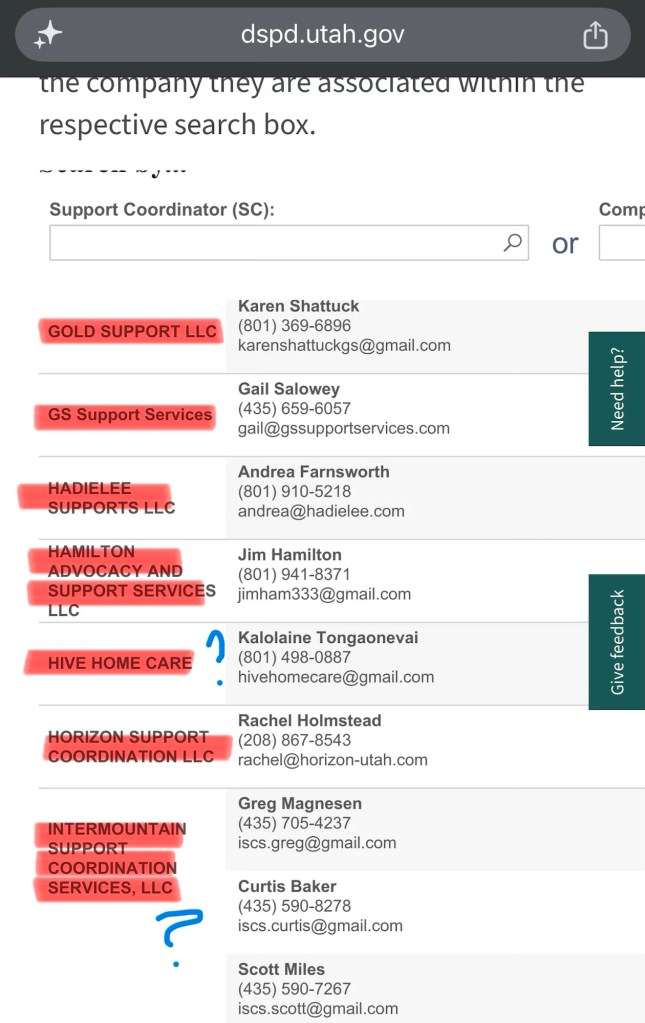
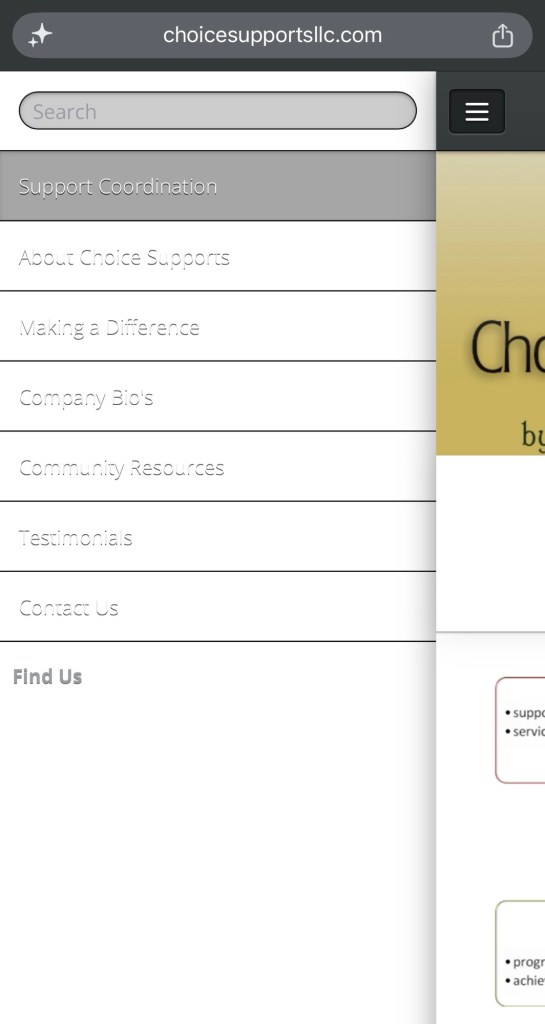
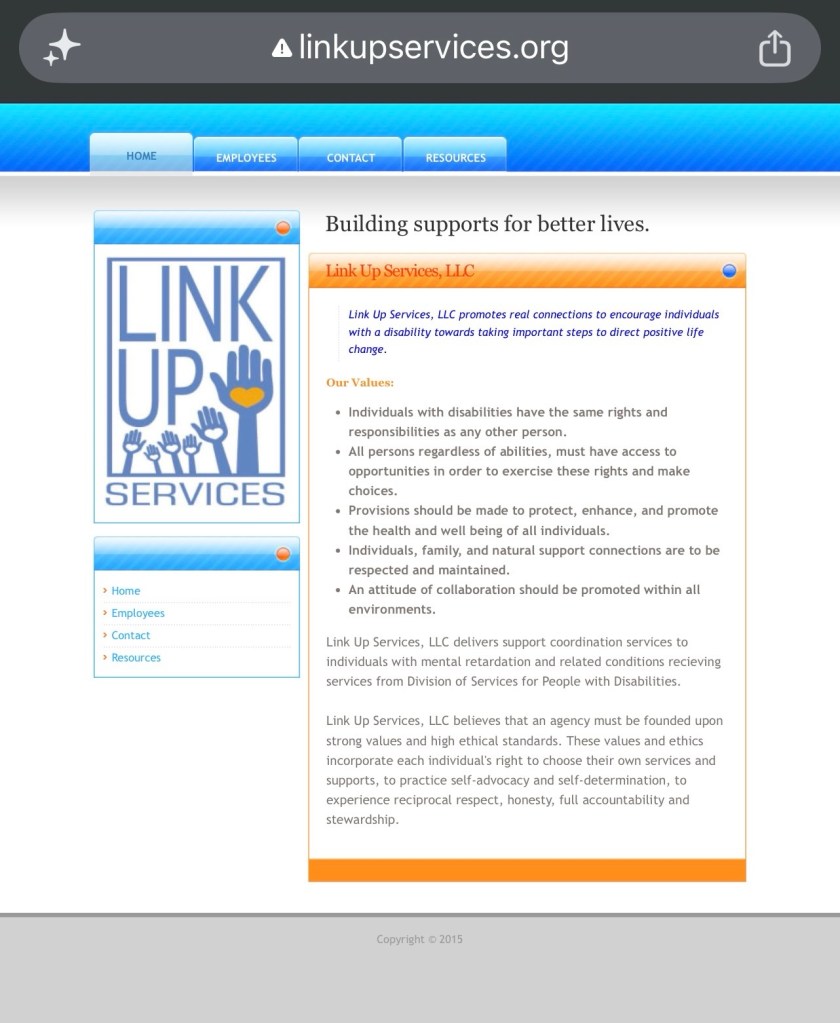
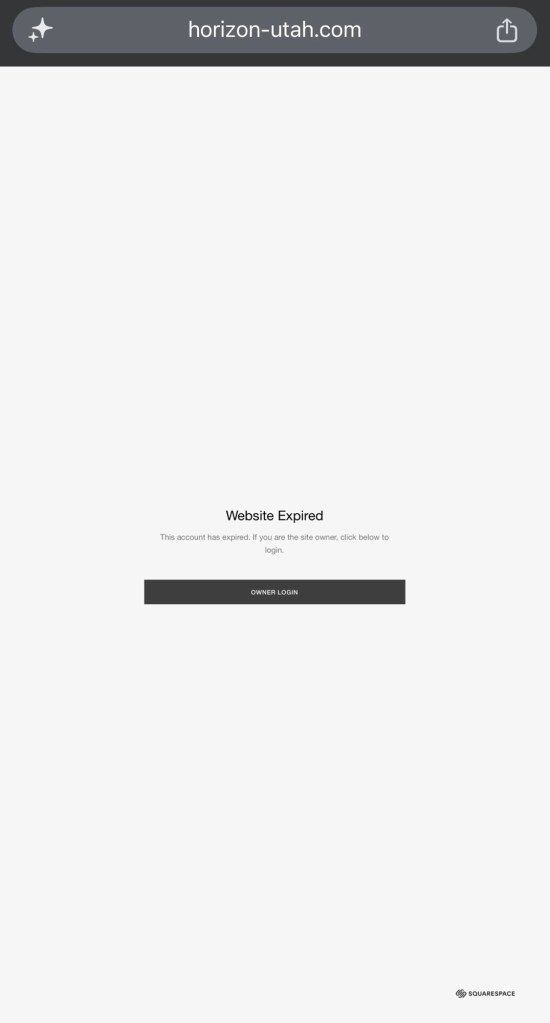
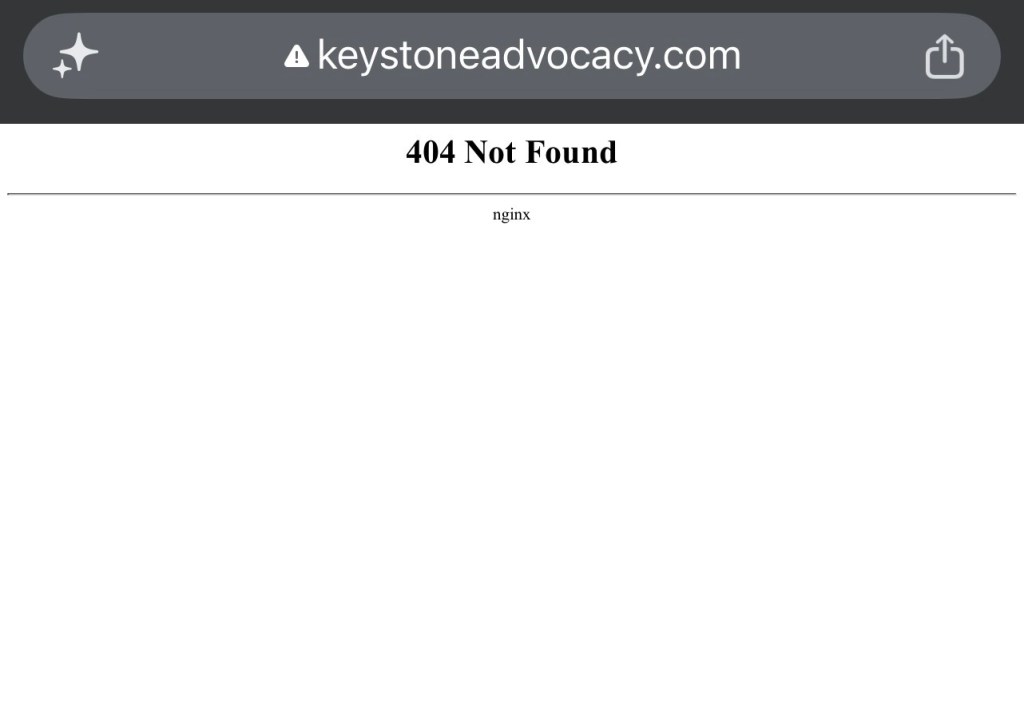
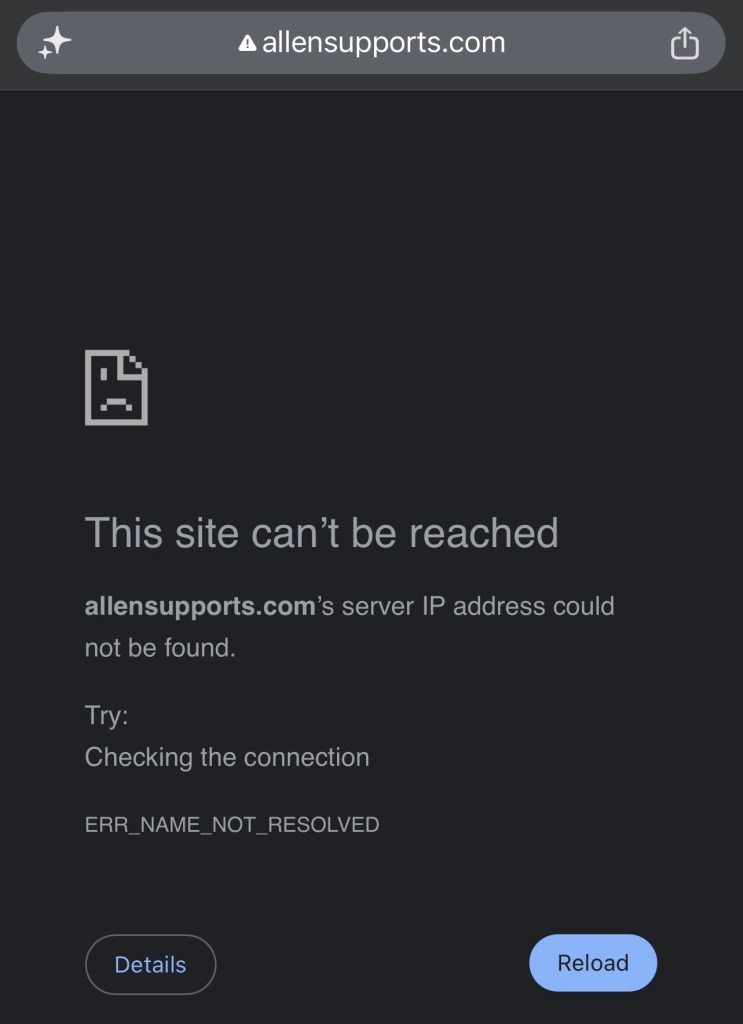
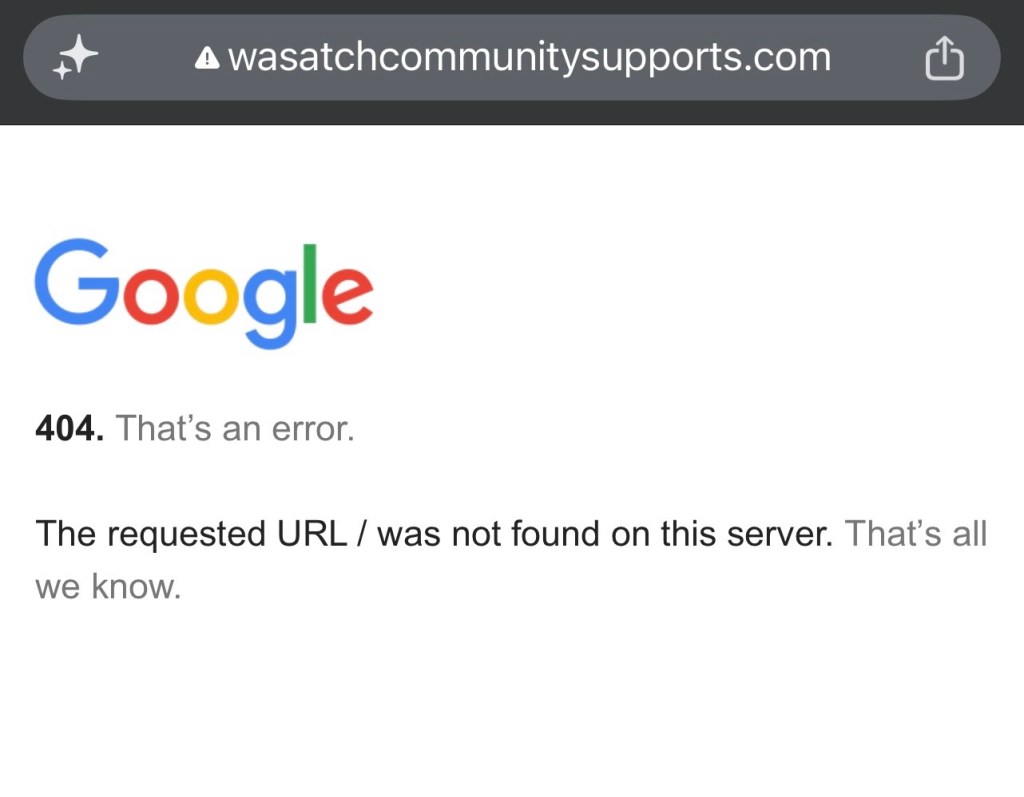

When a disabled person or their family member/caregiver looks for support services, it is extremely discouraging to run into an overwhelming majority of listed service providers who do not exist any longer, have inactive business registration, or are not accessible. Many people give up early on in the process because it is extremely time consuming trying to find these services in the first place, let alone running into extreme barriers to accessing a service coordinator to help coordinate said services.
I started my audit at 8:28 PM and did not finish until 11:20 PM— I have excellent researching skills and it still took me nearly 3 hours to do this. Of the first 10 listed Service Coordinators, 7 were not viable. That alone would make most people give up immediately.
As both a disabled person myself who relies on state programs and services, and as a disability advocate who helps connect other disabled people and their caregivers to resources, seeing and experiencing this kind of state-level failure is appalling and completely unacceptable.
If DSPD actually does work closely with support coordinators to monitor the quality of the services they provide and the list was allegedly updated on the same day I did my own audit, then how come 74.29% of the list is essentially obsolete?
I do not think we can fully trust that DSPD or Utah Department of Health and Human Services is actually keeping tabs like they say they are.
This HAS to change. Disabled peoples’ lives literally depend upon it.


Leave a Reply